
Other People’s Closets: EARTHEATER
Eartheater’s Closet Is a Living Archive of Sound, Survival, and Self-Mythology
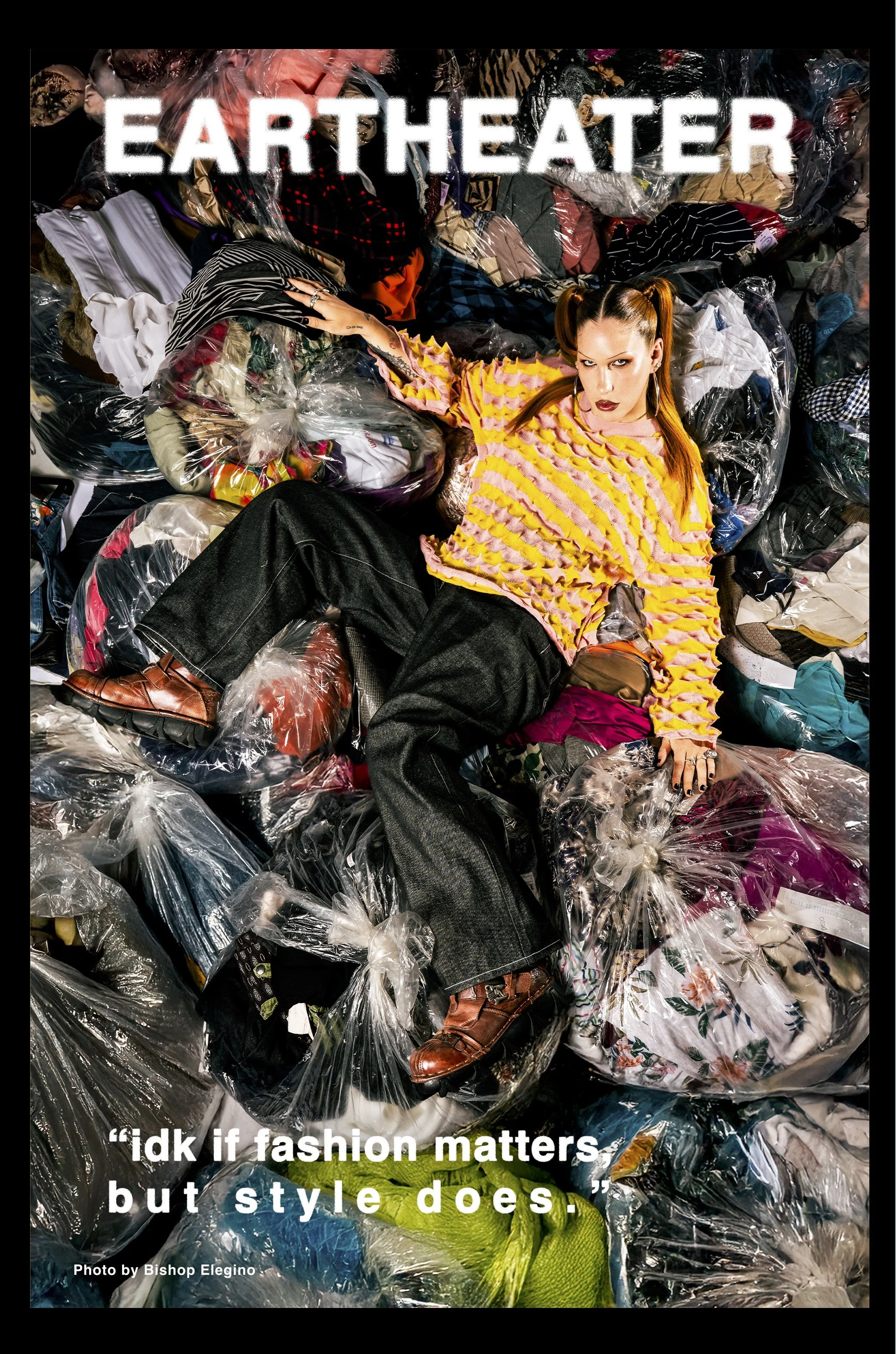
For Eartheater, clothing isn’t decoration—it’s documentation. The recording artist, Brooklyn baddie, multidisciplinary creative, and mother approaches her closet the way she approaches sound design: layered, intentional, and emotionally charged. Every piece holds memory. Every silhouette carries a frequency.
“I don’t know if fashion matters, but style does,” she says—a philosophy that pulses through her wardrobe. Where others see garments, she sees narrative. The custom Coachella look embroidered with lyrics down the spine. Crystal-trimmed pieces that refract stage lasers into constellations. A jacket that moves like a train behind her, transforming performance into procession. These aren’t outfits; they’re extensions of her sonic world-building.
Her evolution in style mirrors her growth as an artist. Early thrifted finds were guided by instinct—what felt good, what felt powerful. Now there’s a deeper fluency: an understanding of designers, construction, and fashion history that sharpens her choices without muting her intuition. She still gravitates toward the unexpected—a sculptural bag, a sharply structured boot, a hyper-feminine heel in bubblegum pink—but the curation is deliberate. Awareness has replaced impulse; intention has replaced trend.
Eartheater’s closet is also a study in contrast. Tough, almost industrial textures sit beside delicate bows and rhinestones. A Prada bag shares space with stage-worn relics. Sky-high black boots coexist with playful sneakers. It’s this push and pull—hard and soft, underground and luxury, mother and muse—that defines her aesthetic. Brooklyn grit meets divine feminine fantasy.
And then there’s the practicality woven into the poetry. She talks about style as something chosen—even in constraint. Even in places where self-expression is limited, the crease in a pant leg or the way fabric is pressed can become an act of authorship. The message is clear: personal style is autonomy. It’s the quiet rebellion of deciding how you show up.
Motherhood has added dimension, not dilution. Her closet reflects multiplicity—sensuality and strength, chaos and control, softness and spectacle. She dresses not to perform a single identity, but to hold all of them at once.
Other People’s Closets is about more than what’s hanging on the rack. It’s about the psychology of adornment, the emotional residue stitched into seams. In Eartheater’s world, clothes don’t just speak—they sing.